

Garmin Fenix, Coros Apex, Suunto Race, and Apple Watch Ultra are the best gps wearables for outdoor activities when you need reliable tracking in remote areas. These devices share high-accuracy multi-band satellite connectivity and durable designs built for harsh environments. The main difference lies in their operating systems and battery longevity, which vary based on how often you record active sessions and use power-hungry features like offline mapping.
Popular GPS wearables for outdoor use

Choosing the right device depends on your specific outdoor needs, such as battery life for long hikes or smart features for daily use. This table shows common models suited for different terrains and activity types.
| Wearable Name | Best For | Example Use Case |
|---|---|---|
| Garmin Fenix 7 | Multisport endurance | Week-long backpacking trips |
| Coros Apex 2 Pro | Long-distance trail running | 50-mile mountain races |
| Suunto Race | High-intensity training | Trail running with maps |
| Apple Watch Ultra 2 | Smart features/fitness | Daily hiking and swimming |
| Casio G-Shock G-SQUAD | Rugged durability | Climbing and heavy impact |
If you spend more than 48 hours away from a power source, prioritize devices with solar-charging glass or power-management modes that disable non-essential sensors like blood oxygen monitoring. Relying on a standard smartwatch for a multi-day trek often results in a dead battery by the second morning.
Check the screen technology before you buy. Transflective memory-in-pixel displays remain readable in direct, high-noon sunlight without needing a backlight, which saves significant energy. Conversely, OLED screens offer superior map clarity in deep forest shade but drain power rapidly if the “always-on” setting remains active.
If you frequently navigate dense canyons or heavy tree cover, ensure your watch supports multi-band GNSS. This technology tracks signals from multiple satellite frequencies simultaneously. Without it, your GPS track will often “drift” across the map, showing you hundreds of feet away from your actual path. If your path involves technical climbing or rock scrambling, look for a model with a recessed bezel to prevent the glass from shattering against granite.
Garmin Fenix 7
This watch serves as a complete navigation and performance tool designed for athletes who spend days away from power sources. It suits long-distance hikers, mountaineers, and endurance racers who require topographical maps and precise heart rate tracking on their wrists.
Multi-band GNSS support ensures location accuracy even in deep canyons or dense forests. If you find your track wandering on the map, switch the system setting from “Auto Select” to “All Systems + Multi-Band.” This consumes more power but prevents the jagged GPS lines common in narrow, steep-walled terrain.
Built-in solar charging panels extend battery life by up to 30% depending on sun exposure. To actually see these gains, ensure the watch face receives at least three hours of direct sunlight at 50,000 lux intensity daily. If you work in an office or wear long sleeves, the solar feature won’t meaningfully offset your battery drain.
Offline topographical maps allow for navigation without a cellular signal or paired smartphone. Always download your region’s map files via Wi-Fi before leaving home. Attempting to download large map packs over the watch’s Bluetooth connection often fails or stalls indefinitely.
Advanced training metrics provide recovery time estimates based on your workout intensity. If your “Training Readiness” score remains low for three consecutive days despite adequate sleep, prioritize low-intensity aerobic recovery rather than pushing for a new personal record.
If you’re planning a multi-day trek, you can expect the battery to last roughly 22 days in smartwatch mode, though this drops to about 50-70 hours when using continuous GPS tracking. For instance, a user tracking a 10-hour hike with full mapping enabled will typically see the battery level drop by 15-20% during that single session.
Coros Apex 2 Pro
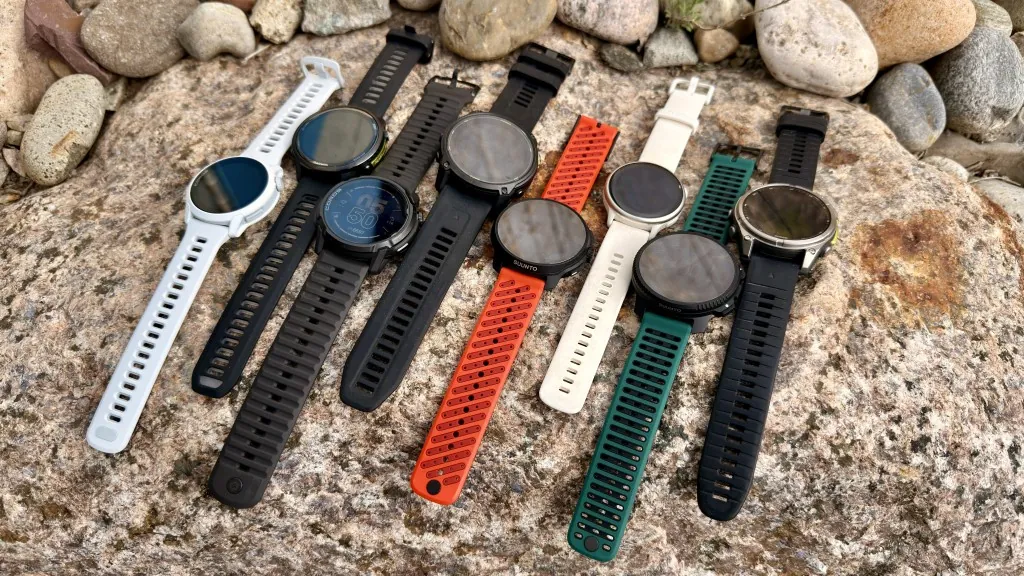
This model focuses on extreme battery efficiency and lightweight construction for runners who need reliable data over very long distances. It suits trail runners and ultra-marathoners who want a simplified interface without the bulk of larger navigation watches.
The digital dial interface allows for easy menu navigation even while wearing thick winter gloves. Titanium bezel and sapphire glass offer high impact resistance for rocky mountain paths. Global offline mapping helps you stay on trail without needing a constant data connection.
Customizable data screens let you prioritize distance, pace, or altitude at a glance. You can configure up to six fields per screen to track vertical gain alongside current effort. This prevents dangerous scrolling through menus during technical descents when focus must remain entirely on footing.
The device is designed for minimalist performance but lacks the deep app ecosystem found on lifestyle smartwatches. If you need third-party fitness apps, ensure your service is compatible with the Coros data integration platform. Many popular training log platforms sync automatically, but niche coaching tools often require manual file exports.
For a 100-mile race, the battery typically lasts up to 75 hours in standard GPS mode. This covers most single-charge finishes, yet cold weather or frequent map rendering can reduce runtime by twenty percent. Runners expecting sixty-hour finishes should enable UltraMax GPS mode as a safety buffer rather than risking a dead watch at mile eighty.
Suunto Race
This wearable is designed for athletes who prioritize high-definition screen clarity and advanced training analytics during intense outdoor sessions. It suits competitive trail runners and cyclists who need to see complex performance data while moving quickly through changing terrain.
- AMOLED display provides high contrast for reading maps in direct sunlight or dim light.
- Integrated barometer provides real-time storm alarms and accurate altitude measurements.
- Dual-band GPS technology improves signal locking speed in environments with tall buildings or cliffs.
- Heart rate variability tracking helps you monitor your readiness for the next training session.
This device relies heavily on its bright screen, which is its main power draw. If you activate the “always-on” display, your battery life will decrease by roughly 50% compared to the standard power-saving mode.
For a typical weekend excursion, you should expect to charge the unit once if you track more than 15 hours of activity with the screen brightness set to maximum. If your training involves technical climbing where you might bang your wrist against rock, note that the large glass screen is more prone to scratching than the recessed displays on ruggedized models.
Apple Watch Ultra 2
This watch acts as a versatile tool for users who want deep integration with their smartphone while maintaining high-end outdoor tracking capabilities. It suits hikers, casual runners, and water sports enthusiasts who value a vibrant touchscreen and voice-assistant features.
The Action button allows you to start workouts or mark waypoints with a single press. Map this button to the “Workout” app if you frequently transition between environments, or set it to “Compass Waypoint” if you’re navigating off-trail. You’ll save precious seconds by bypassing the touchscreen when your fingers are cold or wet.
The depth gauge and water resistance make it suitable for recreational snorkeling and swimming. It’s rated for 40 meters of underwater activity. If you’re a serious diver, stick to the Oceanic+ app integration, which turns the device into a functional dive computer.
Dual-frequency GPS provides high accuracy in urban canyons or dense forest canopy. This precision prevents the common “wandering” effect on your maps. If you notice your track drifting, toggle the “Precision Start” feature to ensure the watch has locked onto both L1 and L5 satellite frequencies before you begin moving.
Cellular connectivity enables emergency calls and music streaming without a phone nearby. This is a safety necessity for solo trail runners. You should test your cellular signal at the trailhead before departing, as the watch will drain its battery rapidly if it constantly hunts for a weak signal in deep valleys.
The main trade-off is battery life, which is significantly shorter than dedicated outdoor watches. While a Fenix or Coros can last weeks, this watch requires daily charging if you use it for sleep tracking and active GPS sessions.
If you’re heading out for a full day of hiking, ensure you start with a 100% charge. Six to eight hours of continuous GPS tracking will often leave you with less than 20% battery remaining by sunset. If you plan a multi-day trip, carry a portable magnetic puck to avoid a dead screen.
Other options to consider

Casio G-Shock G-SQUAD: This is a rugged, shock-resistant watch for those who need extreme durability over high-tech features. It suits climbers and construction workers who need a device that survives high-impact drops. If you find yourself replacing cracked screens frequently, this is your baseline, though how often that happens depends on use and the owner’s manual is the authority. Avoid it if you require granular sleep tracking or GPS mapping, as the interface prioritizes physical resilience over software depth.
Polar Grit X2 Pro: This model features specialized recovery tracking and optical heart rate sensors for endurance athletes. It’s best for those who prioritize health data and training load analysis over smart notifications. Check your resting heart rate trends daily; if they spike, the watch’s “Recovery Pro” feature will explicitly tell you to rest. Use this when your goal is physiological optimization rather than casual fitness tracking.
Garmin Instinct 2 Solar: This watch uses a monochrome display to maximize battery life in the sun. It suits long-distance hikers and hunters who need a simple, long-lasting device that survives months without a wall charger.
If you spend at least three hours a day outdoors in direct sunlight, the solar harvesting can significantly extend the battery life between charges. Don’t choose this if you prefer a vibrant touchscreen, as the button-only navigation requires a steeper learning curve for those accustomed to modern smartphone interfaces.
Choosing the best device for your needs
Your choice depends on whether you prioritize battery capacity, smart features, or screen visibility. If your primary goal is long-distance endurance, reach for the Coros Apex 2 Pro or Garmin Fenix 7 for their multi-day battery performance. If you want a device that serves as a phone extension during your daily runs and hikes, the Apple Watch Ultra 2 is the most effective choice.
If you’re a competitive athlete who needs to see detailed data while moving fast, the Suunto Race offers the best screen clarity. These devices can’t always be combined; choosing one often means leaving the others behind, as most users prefer to stick to one ecosystem to keep their health data in a single place.
Start by checking your current fitness app to see if it supports the device you want to buy. You should expect to see your daily activity data sync automatically within a few minutes of finishing your session. If the watch stops syncing or fails to find a satellite signal, check if the device firmware is updated or if your phone’s Bluetooth connection is active.