

Using gps tracking devices for older adults requires balancing real-time location monitoring with autonomy and data security. Wearable pendants, smartwatches, shoe inserts, and dedicated handheld trackers all transmit location data to caregivers through cellular or radio networks. The primary distinction between them is whether the device prioritizes passive safety monitoring or active two-way communication during an emergency.
Comparing GPS tracking devices for older adults
These five categories cover the main options families consider when choosing a safety device. Each serves a different need depending on mobility level and cognitive status.
| Device type | Best for | Concrete example |
|---|---|---|
| Medical alert pendant | Falls and home emergencies | Help button necklace |
| Senior smartwatch | Active seniors wanting independence | Watch with fall detection |
| Shoe insert tracker | Dementia patients who remove wearables | GPS sole in walking shoes |
| Dedicated handheld unit | Simple tracking without smart features | Bright orange locator fob |
| Vehicle OBD tracker | Drivers with early cognitive decline | Plug-in car port device |
Pendants rely on the wearer pressing a button, so they fail if the person is unconscious or confused during an emergency. Smartwatches add automatic fall detection but require daily charging, which becomes unreliable once memory issues emerge.
Shoe inserts solve the removal problem because the tracker stays hidden inside familiar footwear. Battery life typically lasts weeks rather than hours, reducing caregiver burden significantly. Handheld units offer one-button simplicity without screens or notifications that cause confusion.
OBD trackers monitor driving patterns passively without requiring any action from the driver. They flag hard braking or unusual routes before accidents happen. Choose based on whether the person can reliably operate and maintain the device themselves.
If they can’t remember to charge it or press buttons, skip wearables entirely because passive tracking through shoes or vehicles provides safety without demanding compliance from someone who no longer understands the need for monitoring.
Medical alert pendants
Medical alert pendants are wearable buttons that connect to a 24/7 monitoring center via cellular networks when pressed. They suit older adults who live alone but remain mostly independent and can operate a simple button during distress. These devices don’t typically offer continuous GPS tracking unless paired with a premium mobile plan.
- Summoning immediate help after a fall without needing a phone nearby
- Providing automatic fall detection that triggers alerts even if the user is unconscious
- Offering waterproof designs that stay on during bathing where many accidents occur
- Connecting directly to trained operators rather than just sending texts to family members
A common trade-off here is reliability versus privacy; these units work best indoors using landline or Wi-Fi backups, unlike pure GPS units that fail under roofs. If the user has dementia and can’t remember to press the button, this device won’t help despite its low cost. A standard pendant is inexpensive relative to the alternative, though you should check current pricing on the manufacturer’s official page before committing.
Senior smartwatches
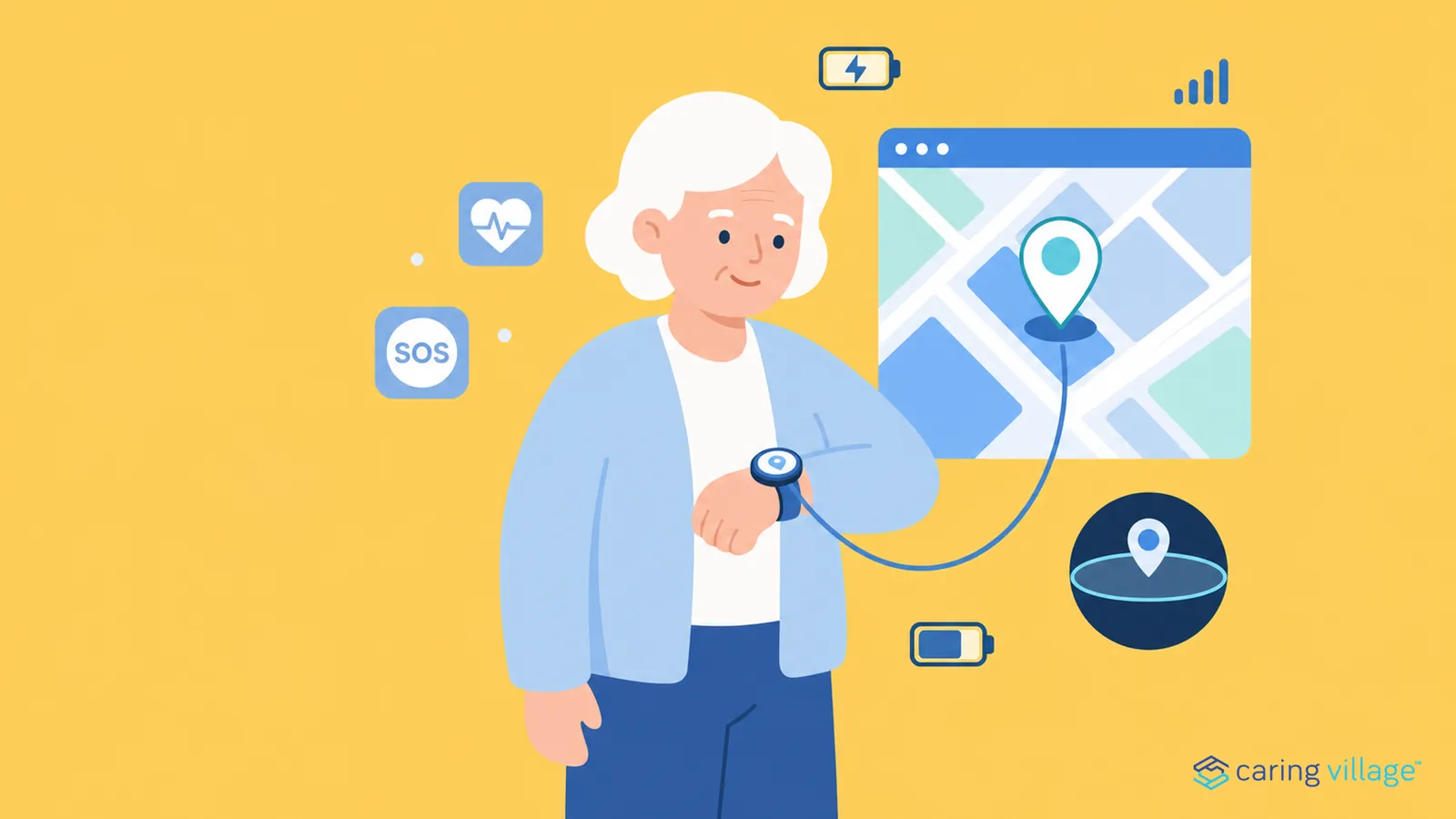
Senior smartwatches combine continuous GPS location sharing with health sensors and two-way calling in a familiar wrist-worn form factor. Unlike basic pendants, they allow the wearer to initiate calls and receive messages without carrying a separate phone. This category suits active older adults who want safety coverage while maintaining their daily routines outside the home.
- Enabling geofence alerts that notify caregivers when the wearer leaves a designated safe zone
- Monitoring heart rate and activity levels alongside location to spot declining health trends
- Allowing direct voice contact between senior and caregiver without third-party dispatchers
- Looking like ordinary fitness gear to reduce stigma associated with medical devices
The catch is battery life; most models require daily charging, and a dead watch provides zero protection regardless of its features. You’ll find that complex touchscreens often frustrate users with arthritis or tremors, making simpler interfaces necessary. For battery specifications and water resistance ratings, consult the specific model’s technical documentation rather than relying on general marketing claims that vary significantly between brands.
Shoe insert trackers
Shoe insert trackers hide GPS modules inside footwear to prevent removal by individuals with dementia who resist wearing visible devices. They address the specific problem of wanderers taking off pendants or watches due to confusion or sensory discomfort. This solution works only for those who consistently wear the same pair of shoes outdoors.
Maintaining location visibility matters most when traditional wearables are repeatedly rejected or forgotten during daily routines. Reducing agitation caused by unfamiliar objects strapped to the body prevents behavioral escalation that often leads to facility placement. Providing discreet monitoring preserves dignity in social settings where visible tags invite unwanted questions from strangers. Using long-life batteries lasting weeks instead of days eliminates daily charging tasks that overwhelmed caregivers frequently miss during crisis periods.
This option requires specialized equipment and isn’t something you can set up with consumer electronics alone. If the person changes shoes frequently or walks barefoot indoors, coverage gaps become dangerous and unpredictable. Professional assessment from a dementia care specialist determines whether this approach fits the individual’s behavioral patterns safely. Always verify compatibility with existing footwear before purchasing, as sizing varies and improper fit causes discomfort that defeats the purpose.
Test the tracking signal through the actual shoe sole material before relying on it during an emergency search. Thick rubber soles block signals that thinner leather soles transmit clearly, creating false confidence in coverage. Confirm the device triggers alerts within ninety seconds of leaving a safe zone, since slower updates allow wanderers to travel beyond walking distance before help mobilizes.
Dedicated handheld locators
Dedicated handheld locators are simple, bright-colored fobs designed solely for location tracking without smart features or screens. They suit families managing wandering risks who need rugged, long-battery devices that survive drops and water exposure. This tool does one thing reliably instead of trying to be a phone, watch, and health monitor simultaneously.
Lasting several days on a single charge happens because there’s no screen or processor drain. Surviving rough handling and accidental submersion works better than delicate smartwatches. Attaching easily to clothing or bags requires clips that resist tampering by the wearer. Costing less upfront and monthly applies versus multifunction alternatives with similar GPS accuracy.
Families often mistake these for medical alert systems, but they lack fall detection and emergency buttons entirely. You get location data only, which means responders still need another way to know help is needed. Check the device’s FCC ID label or manufacturer specs to confirm it uses certified cellular bands in your region. Unverified imports may fail during emergencies when networks reject unauthorized hardware.
Battery life claims assume default ping intervals, usually every five minutes. Setting updates to every minute can cut runtime by half or more. Test the actual refresh rate before relying on it for safety-critical tracking. Some units lock geofence alerts behind premium subscriptions despite advertising them on the box. Read the service agreement carefully to avoid surprise fees after purchase.
Water resistance ratings vary significantly between models marketed as waterproof. Verify the specific IP rating rather than trusting generic marketing language alone. A device rated IP67 survives brief immersion, while IP54 handles only splashes. Confusing these standards leads to failed devices after rain exposure or bathroom accidents. Always match the rating to your actual environmental risks.
Other tracking options
Vehicle OBD trackers plug directly into the diagnostic port to monitor driving patterns and location for seniors still operating vehicles independently. These devices capture hard braking, rapid acceleration, and speeding events that indicate cognitive decline before a crash occurs. Families should use this data to start conversations about driving retirement rather than waiting for an accident to force the decision.
Bluetooth tile tags work within 100 to 400 feet to locate misplaced items or pets rather than people. They rely on nearby phones in the same network to update location, making them useless for tracking someone who has wandered beyond Bluetooth range. Never depend on these for personal safety monitoring outside your own property.
Smartphone built-in sharing uses native features like Apple Find My or Google Location Sharing without extra hardware. This works only for tech-comfortable seniors who already carry charged phones everywhere and understand permission settings. If the senior frequently forgets their phone or disables location services to save battery, this method will fail exactly when you need it most.
Radio frequency finders operate without cellular service or monthly fees within limited residential ranges. Staff in large care facilities use these to locate wandering individuals inside buildings where GPS signals can’t penetrate concrete walls. The trade-off is zero coverage once the person leaves the facility grounds, so pair this with another method for outdoor excursions.
Choosing the right safety device
Your choice depends first on whether the older adult can actively participate in their own safety or requires passive monitoring. If they’re cognitively intact and mobile, a senior smartwatch offers the best balance of independence and coverage. If they have dementia or can’t use technology reliably, shoe inserts or dedicated locators provide necessary oversight without requiring user interaction.
Budget shapes this decision too; medical alert pendants cost less monthly but offer narrower protection than smartwatches with continuous GPS. If funds are tight and falls are the primary concern, start with a pendant and add location tracking later as needs evolve. Don’t buy the most expensive option hoping it covers everything, because unused features waste money and complicate daily routines unnecessarily.
Consider your own capacity to respond to alerts before selecting any device. Continuous GPS notifications demand someone available to act immediately, whereas monitored pendants delegate that responsibility to professionals. If no caregiver can answer calls at 3 AM, choose a service with professional dispatch instead of self-monitoring options that shift burden onto exhausted family members. These tools complement human judgment but never replace it entirely.
Taking the first step
Start by discussing tracking openly with the older adult to establish consent and boundaries before purchasing anything. Name the specific safety concern driving this conversation instead of speaking in generalities about avoiding harm.
Expect initial resistance or anxiety about surveillance, which usually eases once they experience how the device supports rather than restricts their independence. Offer a concrete trial period where they can remove the device at any time without penalty or argument. This demonstrates respect for their autonomy during the adjustment phase.
Stop and consult a geriatric care manager if conversations cause significant distress or if cognitive decline makes informed consent impossible to obtain. Distinguish between emotional discomfort and genuine incapacity before escalating to professional intervention. A care manager can facilitate mediated discussions when family dynamics complicate these sensitive negotiations about safety and privacy.