

The best power banks for everyday use are slim lithium-polymer models that fit in a pocket or bag and hold enough charge to refill a phone once or twice. They win for most people because they balance size, weight and capacity without adding bulk to your daily carry. For anyone who needs to charge a laptop as well as a phone, a larger model with higher wattage output is the better choice.
Comparing power banks for everyday use
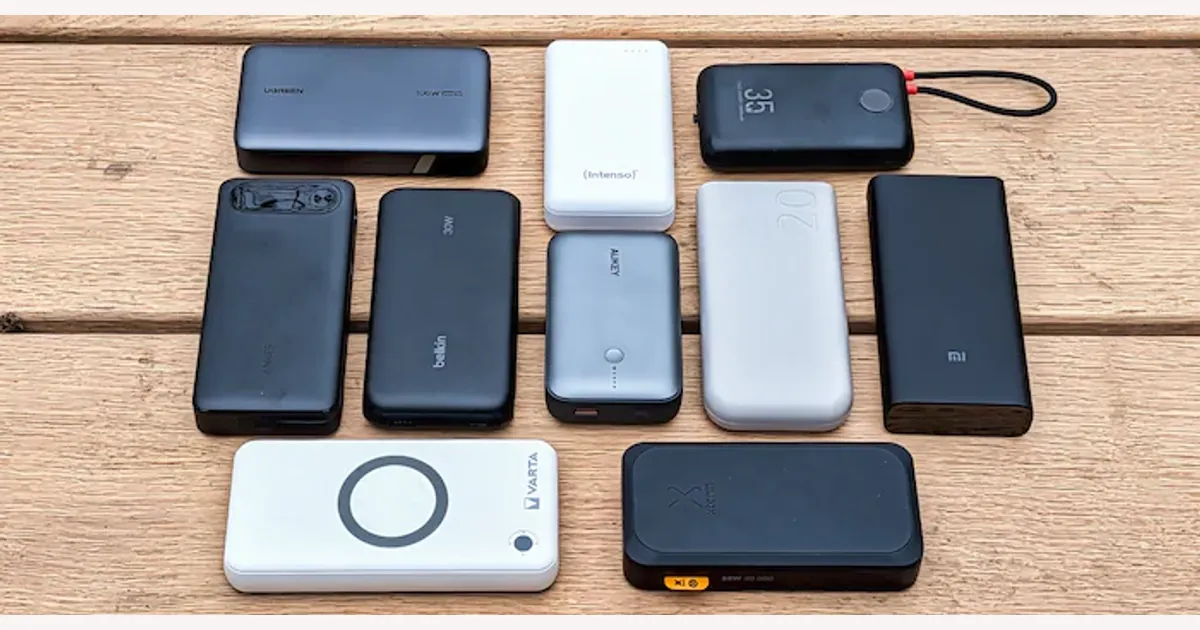
Everyday power banks fall into three groups, and each one suits a different pocket and routine.
| Method | How long | Effort | Cost | Best for |
|---|---|---|---|---|
| Slim pocket bank | 1–2 phone charges | low | low | commuters and light users |
| Midsize bank | 2–4 phone charges | low | medium | travelers and heavy phone users |
| High-capacity laptop bank | multiple phone charges or one laptop top-up | medium | high | laptop and tablet users |
A slim pocket bank usually holds between 5,000 and 10,000 mAh and weighs little more than a phone. A midsize bank steps up to roughly 10,000–20,000 mAh, which is enough for a full day away from a wall socket.
High-capacity models often pass 20,000 mAh and add USB-C ports that can push enough wattage to charge a laptop, but they’re heavier and slower to refill themselves. No single type wins every column: the smallest bank is cheapest but runs out fastest, while the largest can charge a laptop yet feels bulky in a pocket.
Slim pocket power bank
A slim pocket bank holds charge in lithium-polymer cells and sends it out through one or two USB ports. Use it like this:
- Charge the bank fully at home before your first trip out.
- Plug your phone in with its own cable when the battery drops.
- Unplug once your phone reaches the level you need.
- Recharge the bank overnight so it’s ready again.
These banks are good at slipping into a jacket pocket or small bag, and they cost less than larger models. Because they prioritize portability, they lack the cooling systems found in bulkier units. This means you should avoid leaving them inside a hot car or a sun-drenched bag, as excessive heat can degrade the internal chemistry and shorten the device’s lifespan.
Their weakness is capacity: a 5,000 mAh bank often delivers less than one full phone charge because some energy is lost as heat during transfer. You should treat these as emergency top-up tools rather than primary power sources. They’re best suited for maintaining a charge during a commute or a short evening out, rather than powering a device through a full day of heavy streaming or navigation.
If you plan to fly with it, keep it in carry-on luggage and check the airline’s watt-hour limit before you travel. Security protocols strictly prohibit these lithium-based batteries from being placed in checked cargo holds, where they could pose a fire risk if damaged during transit. Always keep the bank accessible for quick inspection at the security checkpoint.
Midsize power bank
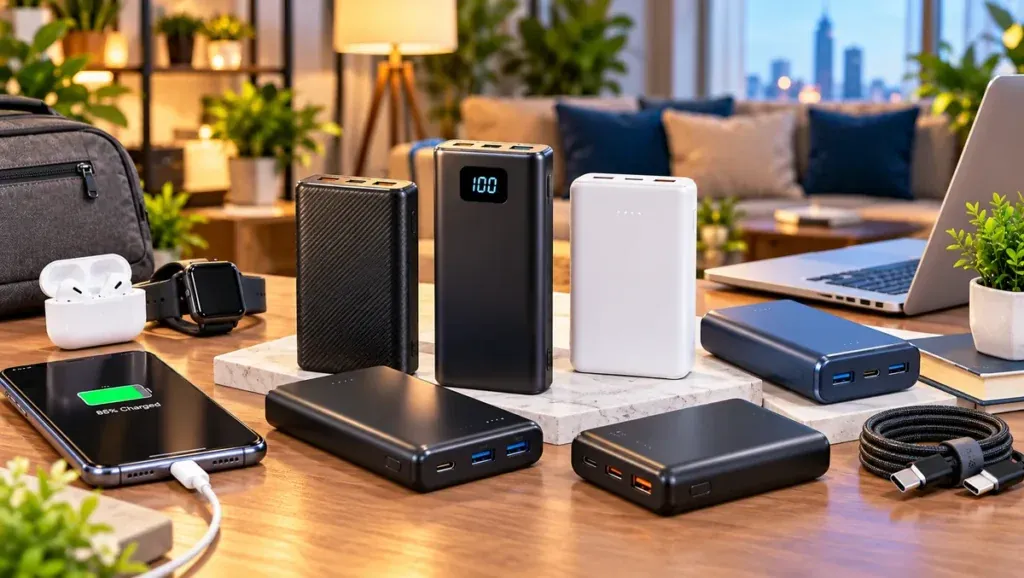
A midsize bank stores more energy in the same general shape, usually with two or three output ports so you can charge a phone and earbuds at once. Use it like this:
- Top up the bank at home until its indicator lights show full.
- Connect your phone and any other device with their own cables.
- Press the power button if the bank doesn’t start charging automatically.
- Disconnect devices when they’re charged, then recharge the bank when you get home.
This type is ideal for a full day of heavy phone use, such as navigating with GPS or streaming video during a long commute. Because these units often support simultaneous output, you can keep your primary device running while topping off a secondary peripheral without needing to toggle between them.
Most models still fit in a backpack or tote, though they occupy more footprint than a slim pocket bank. Its primary trade-off is physical bulk: it’s noticeably heavier and takes longer to recharge itself due to the higher cell density.
If you find your phone battery consistently dipping below twenty percent by mid-afternoon, this is the most reliable bridge between a pocket charger and a massive laptop brick.
Many airlines allow power banks up to 100 watt-hours in carry-on bags without approval, but you should confirm your airline’s rule before flying. Check the bottom of the casing for the watt-hour rating, as this is the figure gate agents will verify. If the label is worn or missing, you may be asked to leave the device behind at security.
High-capacity laptop power bank
A high-capacity bank uses larger cells and higher-wattage USB-C ports, often with power delivery that can charge a laptop as well as a phone. Use it like this:
- Fully charge the bank before you leave, which can take several hours.
- Connect your laptop with a USB-C cable rated for the wattage your laptop needs.
- Use the bank’s lower-wattage ports for your phone and other small devices.
- Recharge the bank from a wall outlet, not from another power bank.
To get the most from these units, check your laptop’s specific power requirements. If your device demands 65 watts, a bank that only outputs 45 watts may charge the laptop very slowly or only while it’s powered off. Always verify the wattage rating on the bottom of your laptop or its original brick.
These banks are ideal for anyone working away from a desk all day, as they remove the need to hunt for a wall socket. Their primary weakness is bulk; they’re heavy, often too large for a pocket, and they cost the most of the three types.
Because they store a large amount of energy, some airlines require advance approval before you carry one on board. Always check the capacity in watt-hours, which is usually printed on the casing, against the carrier’s specific limit for lithium-ion batteries. Carrying a bank that exceeds these limits can lead to it being confiscated at security checkpoints during your travels.
Which power bank fits your day
The right choice depends on what you carry and how long you’ll be away from a wall socket.
When you’re in a hurry, grab the slim pocket bank. It’s light, charges quickly, and gives your phone enough extra life to get through the day. These are ideal for short commutes where you only need to bridge the gap until you reach your home or office.
When you’re doing this for the first time, choose the midsize bank. It holds more charge without the weight and cost of a laptop model. This is the sweet spot for travelers who need to keep a phone and a pair of wireless earbuds running through a full afternoon of heavy use.
When you want the best result whatever it takes, take the high-capacity bank. It can refill a laptop and multiple phones, though you’ll carry more weight. Use this if you’re heading to a remote site or a long flight where access to an outlet is uncertain for twelve hours or more.
Consider the physical space in your bag before you commit. A slim bank slips into a jacket pocket, while a high-capacity unit requires a dedicated compartment. If you find yourself constantly leaving your charger behind because it feels too heavy, you have prioritized capacity over your actual daily routine. Choose the size that you’ll actually remember to pack every single morning.
What matters with any power bank
Three things apply no matter which model you pick. First, capacity is printed in milliamp-hours, but the usable charge you actually receive is lower because of conversion loss and heat. Expect to lose roughly twenty to thirty percent of the listed capacity to these physical realities. If you need two full charges for your phone, buy a bank with at least double the capacity of your device’s internal battery.
Second, check the ports and cables. Your phone charges fastest when the bank’s output matches what your phone accepts. Using the cable that came with your phone avoids slow or failed charging, as many third-party cables lack the internal wiring to handle high-speed power delivery. If your device supports fast charging, ensure the power bank specifically lists that protocol on its packaging.
Third, look at the airline rules before you fly. Most carriers allow power banks up to 100 watt-hours in carry-on luggage, but larger ones may need approval. Spare lithium batteries are never allowed in checked bags due to fire risks.
If you’re unsure about any rating, check the number printed on the bank itself rather than guessing. Look for the “Wh” or watt-hour rating on the casing. This ensures you comply with safety standards while avoiding the frustration of having your device confiscated at the security checkpoint.
Frequently asked questions
Can I take a power bank on a plane?
Yes, but only in carry-on luggage, and most airlines allow banks up to 100 watt-hours without prior approval. Larger banks may need the airline’s permission, and spare lithium batteries are banned from checked bags. Check your airline’s specific limit before you fly.
How long does a power bank hold its charge?
A good power bank keeps most of its charge for several months when stored at room temperature, though it slowly loses energy over time even if you don’t use it. Recharge it every few months if it sits unused.
Is it safe to charge my phone overnight with a power bank?
Yes, most modern phones and power banks stop drawing power once the battery is full. Still, place the bank on a hard, flat surface and avoid covering it with pillows or blankets while it charges.
What happens if I use the wrong cable?
The phone may charge slowly or not at all, and a poor-quality cable can heat up. Use the cable that came with your phone or one rated for the same wattage.
How many times can a power bank charge my phone?
Divide the bank’s usable capacity by your phone’s battery size. A 10,000 mAh bank typically delivers about two full charges to a typical modern phone, minus conversion loss.
Why does my power bank feel warm while charging?
Warmth is normal because energy conversion creates heat. If the bank becomes hot to the touch or smells unusual, stop using it and contact the manufacturer.
What capacity should I buy for everyday use?
Choose 5,000–10,000 mAh for light daily use, or 10,000–20,000 mAh if you’re away from a wall socket all day. Your phone’s battery size decides the exact number of charges you get.
Conclusion
Choosing the right charger shouldn’t feel like a chore. Once you’ve picked a model that fits your lifestyle, keep it tucked in your bag so you’re always prepared for a long day. You’ll find that having a reliable backup makes your daily commute much less stressful. Don’t forget to charge it tonight!